IT Support Dubai: 7 Things to Check Before Hiring a Company
If you’re searching for IT support Dubai, the stakes are higher than just “keeping computers running.” Choosing the wrong company...

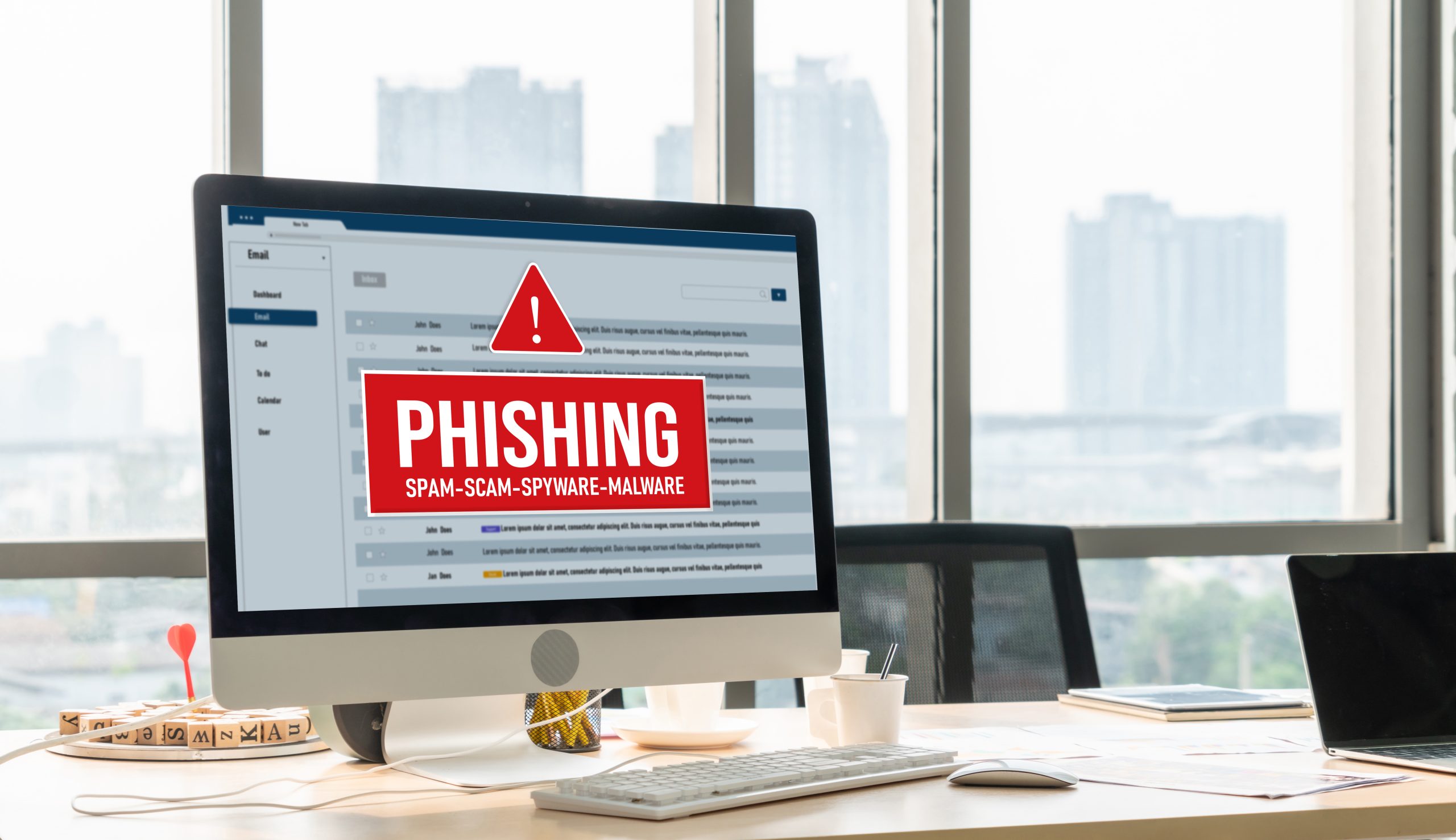


A few years ago, most phishing emails were easy to spot. They usually came from strange email addresses, contained spelling mistakes, and looked obviously suspicious. Businesses relied heavily on spam filters, antivirus software, and basic employee awareness training because, honestly, that was often enough.
That’s no longer the case.
According to Microsoft Threat Intelligence, phishing attacks continue to rise across cloud environments, with Microsoft 365 remaining one of the most heavily targeted platforms for credential theft and business email compromise campaigns.
Security teams are now dealing with AI phishing attacks that look almost identical to legitimate business communication.
In 2026, cybercriminals are using artificial intelligence to create phishing emails that sound natural, look professional, and imitate real business communication almost perfectly.
This is why businesses are seeing a sharp increase in:
Traditional email security was designed for older phishing methods. AI phishing attacks are designed specifically to get around those defenses.
And that’s exactly what makes them dangerous.
An AI phishing attack is a phishing campaign that uses artificial intelligence to create or improve social engineering attacks. Instead of manually writing phishing emails, attackers now use AI tools to generate realistic messages in seconds.
The difference between traditional phishing and AI-generated phishing is realism.
Older phishing emails often felt generic. They were mass-produced and easy to identify because the language sounded unnatural. Many businesses are now seeing phishing emails that reference real vendors, internal projects, employee roles, and Microsoft 365 workflows with alarming accuracy.
For example, an employee may receive an email that appears to come from:
The message may include real employee names, accurate company branding, proper formatting, and even references to actual business activities.
That level of sophistication is exactly why phishing attacks in 2026 are succeeding at much higher rates than older phishing campaigns ever did.
The biggest reason AI phishing attacks are increasing is simple: attackers can now scale social engineering faster than ever before.
Traditional phishing required time and effort. Attackers had to manually create email templates, research targets, and design phishing pages. AI dramatically reduces that workload.
Now cybercriminals can generate hundreds of highly convincing phishing emails within minutes. AI tools can rewrite messages repeatedly until they bypass spam filters, personalize attacks for different employees, and even imitate the communication style of specific executives.
This changes phishing from a basic spam operation into a highly efficient automated attack system.
One of the biggest advantages attackers gain from AI is language quality. Older phishing emails often contained poor grammar or awkward formatting that immediately raised suspicion.
Many phishing emails that security teams investigate today no longer contain the broken grammar or formatting issues that employees were trained to look for. The wording feels human. The tone matches professional workplace communication.
That makes phishing protection much harder because employees can no longer rely on obvious warning signs.
Attackers are no longer sending the same phishing email to thousands of people.
AI tools can analyze:
Then they create phishing emails tailored to individual employees or departments.
A finance employee may receive a fake invoice escalation while HR receives a fake candidate document. The attack feels relevant to the recipient, which increases the chances of engagement.
Traditional email security systems depend heavily on recognizing known phishing patterns.
AI phishing attacks adapt constantly.
Attackers can instantly regenerate:
This continuous variation makes older detection methods far less effective.
AI phishing attacks may look sophisticated from the outside, but the process behind them follows a clear and highly efficient system.
What makes them dangerous is not just artificial intelligence itself, but how quickly attackers can combine automation, personalization, and social engineering into a single attack campaign.
Unlike traditional phishing, where one generic email was blasted to thousands of people, AI-generated phishing attacks are built to feel personal from the very beginning.
Before a phishing email is ever sent, attackers spend time collecting information about the person or business they want to target.
They pull data from:
AI tools help process this information rapidly, allowing attackers to build detailed profiles on employees, departments, vendors, and executives within minutes.
For example, if a cybercriminal sees that someone works in finance at a company using Microsoft 365, they may create a phishing email related to invoice approvals, payroll updates, or account verification requests.
The attack immediately feels more believable because it matches the victim’s real role and responsibilities.
Once enough information is collected, attackers use large language models like ChatGPT, Gemini, or Claude to generate realistic phishing emails.
This is where AI phishing becomes significantly more dangerous than older phishing attacks.
The AI can:
If attackers have access to previous email conversations or publicly available writing samples, AI can even imitate how a specific person communicates.
In many cases, the victim doesn’t even realize they’re being targeted. An employee may click what looks like a normal Microsoft 365 security notification during a busy workday, especially if the email arrives alongside legitimate login alerts or document-sharing requests.
That familiarity lowers suspicion and increases the chances of compromise.
Traditional phishing campaigns required a lot of manual effort. AI changes that completely.
Attackers can now generate and distribute thousands of personalized phishing emails simultaneously. Each message may contain slightly different wording, formatting, subject lines, or phishing links to avoid detection by traditional email security systems.
This gives cybercriminals two major advantages:
A single attacker can now launch a campaign targeting hundreds of businesses within hours without manually writing every email themselves.
That’s one reason phishing attacks in 2026 are increasing so rapidly across Microsoft 365 environments and cloud-based businesses.
The final stage happens when the victim interacts with the phishing email.
This may include:
Once the victim takes action, attackers steal credentials, authentication tokens, or sensitive company data.
From there, the attack often escalates quickly into:
And because many attacks now use legitimate accounts after compromise, they become even harder for traditional email security tools to detect.
Traditional email security systems were designed to stop older phishing attacks.
CISA has also warned that AI-generated phishing campaigns are becoming harder to identify because attackers can now create realistic, grammatically correct emails at a massive scale with very little effort.
The problem is that AI phishing attacks no longer look like traditional phishing.
Security analysts now deal with phishing emails that appear professionally written, context-aware, and visually identical to normal business communication.
They avoid the obvious warning signs that older filters were trained to detect. The language sounds human, the formatting looks legitimate, and the message often matches real business workflows.
Attackers can also regenerate phishing emails instantly using AI, constantly changing:
This makes traditional phishing protection far less effective because static email security systems struggle to keep up with constantly evolving attacks.
Another major issue is that many phishing campaigns now come from compromised legitimate accounts instead of fake domains, making detection even harder.
That’s why businesses can no longer rely solely on traditional email security. Modern phishing protection requires layered defenses that combine advanced threat detection, identity protection, employee awareness training, and behavioral monitoring.
Microsoft 365 phishing attacks have increased sharply because Microsoft environments contain valuable business data in one connected ecosystem.
A single compromised account may expose:
Attackers commonly impersonate Microsoft 365 alerts such as password resets, MFA verification requests, shared document notifications, or account security warnings.
Because AI-generated phishing emails look highly convincing, employees are more likely to trust them and enter credentials into fake login portals.
Many businesses believe multi-factor authentication fully protects them against phishing attacks. Unfortunately, attackers have evolved beyond simple password theft.
Modern phishing kits can steal:
That allows attackers to bypass MFA protections after the victim logs in successfully.
As a result, Microsoft 365 phishing protection now requires far more than passwords and MFA alone. Businesses need conditional access policies, identity monitoring, advanced email security, and real-time threat detection to reduce risk.
AI phishing attacks are now one of the biggest drivers behind business email compromise incidents.
Once attackers gain access to a business email account, they can monitor conversations, study financial workflows, and impersonate employees from inside the organization.
This makes the attack far more believable because the emails come from legitimate internal accounts rather than suspicious external addresses.
A small business owner may believe they’re replying to a legitimate vendor conversation, only to discover later that invoice payment details were quietly changed by an attacker monitoring the email thread from inside a compromised Microsoft 365 account.
Attackers commonly use compromised accounts to:
AI makes these attacks even more dangerous by helping cybercriminals generate realistic responses in real time. Instead of sending generic scam emails, attackers can continue entire conversations naturally without raising immediate suspicion.
That’s why business email compromise prevention now depends heavily on strong phishing protection, Microsoft 365 security hardening, and employee awareness training.
Defending against AI phishing attacks requires more than a basic spam filter or antivirus solution. Modern phishing campaigns are smarter, more personalized, and designed to bypass traditional email security systems.
Businesses now need a layered phishing protection strategy that focuses on prevention, detection, and fast response.
Multi-factor authentication is still one of the most important security controls, but businesses should understand that attackers have evolved beyond simple password theft.
Modern MFA bypass phishing attacks that can steal authentication tokens, session cookies, and OAuth permissions after a user logs in successfully. That means cybercriminals may still gain access even if MFA is enabled.
Businesses should strengthen identity security by using phishing-resistant MFA, conditional access policies, device verification, and login risk monitoring. The goal is not just protecting passwords anymore. It’s protecting the entire authentication process.
Many employees still expect phishing emails to look obviously suspicious.
That mindset is dangerous today.
AI-generated phishing emails are polished, professional, and often personalized using real company information. Employees should be trained to recognize:
Modern security awareness training should reflect how phishing attacks in 2026 actually look, not how they looked five years ago.
One of the simplest ways to prevent business email compromise attacks is through independent verification.
If an employee receives an urgent request involving:
They should confirm the request through another communication method before taking action.
Many business email compromise attacks succeed because employees feel pressured to respond quickly. A two-minute verification call can prevent losses that may take months to recover from financially and operationally.
A quick phone call or direct Teams confirmation can stop a phishing attack from turning into a major financial incident. This is especially important because AI phishing attacks often create urgency to pressure employees into acting quickly without verification.
Traditional email security tools alone are no longer enough for modern phishing protection.
Businesses should combine advanced email filtering with identity protection, endpoint monitoring, and behavioral threat detection. This layered approach helps security teams detect suspicious activity even after a phishing email reaches an employee.
For example, if a compromised Microsoft 365 account suddenly logs in from another country, downloads large amounts of data, or begins sending unusual emails internally, security systems should flag that behavior immediately.
Modern phishing protection is no longer just about blocking emails. It’s about monitoring the entire attack lifecycle.
Even strong phishing defenses cannot stop every attack. Some phishing emails will eventually bypass filters or trick employees.
That’s why businesses need visibility after login activity occurs.
Endpoint detection and response tools can identify suspicious behavior, such as:
AI phishing attacks are getting harder to spot, faster to launch, and far more convincing than the phishing scams businesses dealt with a few years ago. By the time a fake Microsoft 365 login page, a wire transfer request, or a compromised email account is discovered, the damage is often already done.
That’s the scary part. Most businesses don’t realize their email security is outdated until attackers get through it.
At ITWiseTech, we help businesses strengthen their phishing protection before a small mistake turns into a serious financial or security incident. Because in 2026, reacting after an attack is no longer enough. The businesses taking AI phishing seriously today are the ones avoiding major problems tomorrow.

If you’re searching for IT support Dubai, the stakes are higher than just “keeping computers running.” Choosing the wrong company...

Looking for cybersecurity companies in Dubai can feel a bit like shopping for insurance. Everyone says they protect you. Everyone...
Planning CCTV for a business sounds simple until you start asking the real questions. How many cameras are enough? Which...

Slow internet, dropped calls, frozen CCTV feeds, weak Wi-Fi, and random downtime are not always caused by your internet provider....
Most businesses do not think about structured cabling until network problems start slowing everything down. Video calls freeze. Internet speeds...
Most businesses think they’re saving money with low-cost cybersecurity solutions. In reality, they’re often just delaying a much bigger bill....