IT Support Dubai: 7 Things to Check Before Hiring a Company
If you’re searching for IT support Dubai, the stakes are higher than just “keeping computers running.” Choosing the wrong company...




Businesses across the UAE are accelerating digital transformation at a speed that’s never been seen before. Cloud adoption, cybersecurity, smart city initiatives, fintech platforms, remote work, and AI-driven services are now standard across Dubai and the broader Middle East.
But with that growth comes a great big risk.
In 2026, the biggest cybersecurity threats facing Middle East businesses are not isolated attacks. They are connected threats. A stolen login leads to email compromise. Email compromise leads to data theft. Data theft turns into ransomware. Ransomware becomes public exposure.
This is the reality of modern cybersecurity in the UAE.
While these cybersecurity threats affect the wider Middle East, this guide focuses primarily on UAE and Dubai-based businesses, where digital adoption and regulatory expectations are among the most advanced in the region.
So, let’s break down the most critical cyber threats businesses in Dubai and the Middle East face in 2026, what they look like in the real world, and how organisations can reduce risk without overcomplicating IT security.
Cybercriminals today operate like businesses. They automate attacks, reuse proven techniques, and scale quickly. Most cyberattacks in the Middle East are now financially motivated, not espionage-driven.
For UAE businesses, this matters because attackers do not need advanced hacking skills. They need:
High-value industries remain prime targets, including finance, healthcare, logistics, real estate, government entities, and energy companies. These sectors rely heavily on uptime, data availability, and digital trust, making them ideal victims for ransomware and cyber extortion.
Ransomware remains one of the most damaging cybersecurity threats in Dubai and the UAE. In 2026, most ransomware attacks involve data theft first, followed by encryption and extortion.
Even organisations with backups can still be forced to respond because stolen data creates legal, regulatory, and reputational risk.
What this looks like in real businesses
What reduces ransomware risk
Phishing remains one of the most common cybersecurity threats in the UAE, but in 2026, it is far more sophisticated than traditional email scams. Attackers now use adversary-in-the-middle phishing to intercept login sessions or authentication tokens, allowing them to bypass multi-factor authentication (MFA) entirely.
Microsoft has warned about AiTM phishing attacks targeting cloud-heavy sectors such as energy, finance, and enterprise IT. These attacks rely on legitimate-looking cloud services and realistic login flows, making them especially effective against Dubai-based organisations using Microsoft 365 and similar platforms.
Phishing is also increasingly brand impersonation-based, with attackers posing as Microsoft, Google, DHL, or internal HR and IT teams. KnowBe4 reports that 62 percent of phishing landing pages are branded, with Microsoft being the most impersonated, making phishing attacks in Dubai and the UAE harder to detect.
Business Email Compromise is a close cousin of phishing and one of the fastest-growing cybersecurity threats facing UAE businesses in 2026. These attacks target finance teams, executives, suppliers, and invoice workflows. No malware is involved. Just social engineering, urgency, and a believable email conversation.
Attackers either hijack real email accounts or impersonate trusted contacts, then request urgent payments or bank detail changes. For many organisations in Dubai and the wider Middle East, these attacks result in direct financial loss within hours.
For organisations strengthening cybersecurity in Dubai and the UAE, stopping Business Email Compromise requires process controls as much as technical security.
Many breaches do not start with a dramatic hack. They start with credentials that were already stolen somewhere else and reused. Once attackers get in, they search for more credentials, and then they move laterally.
Threat reports focused on the UAE and Saudi Arabia have highlighted increased activity around data exposure and underground markets, with sensitive records and corporate data offered for sale.
What reduces risk fast
In 2026, cybersecurity in the UAE will no longer be limited to your own network. Your security posture is closely tied to your vendors and partners. Attackers often go after smaller suppliers first because they are easier to compromise, then use that access to pivot into larger Dubai-based organisations.
This risk commonly shows up through managed IT providers, facilities and security vendors, SaaS platforms with broad permissions, and outsourced support teams that connect directly to internal systems. For businesses across the Middle East, third-party access has become one of the most overlooked cybersecurity risks.
Reducing supply chain risk does not require complex tools. Enforcing least-privilege access, using time-limited vendor credentials with strong logging, and embedding cybersecurity requirements into vendor contracts can significantly strengthen IT security in Dubai and the UAE.
For energy, utilities, manufacturing, and extensive facilities, operational technology is a serious target. It often runs older systems, requires uptime, and cannot patch like a normal laptop fleet.
Kaspersky’s ICS CERT reporting shows the share of industrial computers attacked with malware hovering around the low 20 percent range through 2025 quarters, suggesting persistent pressure rather than a fading problem.
They also report high levels of email-delivered threats impacting industrial environments in the Middle East, including malicious documents spread primarily via email.
What reduces risk fast
In 2026, attackers can generate convincing emails, scripts, and even voice content faster than most teams can train staff. GenAI is also being adopted for defense in the region, which tells you it is already central to the fight.
PwC’s Middle East findings highlight organizations prioritizing GenAI use cases like malware and phishing detection, threat detection and response, and security log analysis.
The danger is executive fraud and vendor fraud. A “CFO voice note” or a “CEO urgent request” becomes easier to fake.
What reduces risk fast
To make sense of the most pressing cybersecurity threats in the UAE, the table below provides a clear snapshot of what businesses are facing in 2026, who is most at risk, and where to act first.
| Threat in 2026 | Who does it target most | Why it works | What to do first |
| Ransomware and extortion | Finance, healthcare, government, logistics | Downtime pressure plus leak pressure | Test restores, secure admin access, patch exposure |
| AiTM phishing and token theft | Energy, enterprise IT, cloud-heavy teams | Captures sessions, not just passwords | Conditional access, session controls, and user training |
| Business email compromise | Finance teams, procurement | Human trust beats controls | Out-of-band payment checks, mailbox monitoring |
| Data leaks and dark web sales | Any org with customer data | Stolen data becomes leverage | Exposure monitoring, segmentation, and rapid containment |
| OT and ICS attacks | Utilities, manufacturing, extensive facilities | Legacy systems, uptime demands | IT-OT segmentation, asset inventory, secure remote access |
| GenAI scams and deepfake fraud | Executives, finance, HR | Speed and realism of deception | Verification rules, fraud playbooks, and awareness training |
This overview highlights why cybersecurity in Dubai and the UAE must focus on prevention, visibility, and fast response. Addressing these risks early can significantly reduce financial, operational, and reputational impact.
Most modern attacks are identity-led. If you harden identity, you cut off a massive chunk of attacker pathways. Focus on privileged accounts first, then expand.
Internet-facing systems are the usual entry point. Inventory what is exposed, patch aggressively, and remove what you do not need.
Because it is happening, Microsoft’s reporting on data theft attempts in incidents is a strong signal that your response plan needs legal, comms, and containment steps ready.
It sounds funny until your finance team is one click away from a loss. Brand impersonation and AiTM tactics make email security a front-line control.
Cybersecurity in 2026 is not about panic. It is about being realistic and prepared. Cybercriminals will keep chasing money, access, and data as digital transformation accelerates across the UAE and the wider Middle East.
Businesses in Dubai and across the UAE that stay ahead focus on strong identity security, reduced attack surfaces, tested incident response plans, and employee awareness training that reflects how modern cyber threats actually work today.
This is where the right cybersecurity partner matters. ITWiseTech helps organisations improve IT security in the UAE, defend against ransomware, phishing attacks, business email compromise, and emerging AI-driven threats.
If you want a clearer view of your cyber risk and practical steps to strengthen your defences, ITWiseTech is ready to help.
Extortion-led attacks are a top concern, especially ransomware combined with data theft and leak pressure, which Microsoft highlights as a major driver of known-motive incidents in the region.
Yes, and they are more advanced. AiTM phishing can capture sessions and tokens, and many phishing pages impersonate trusted brands like Microsoft to trick users.
OT systems prioritize uptime and often include legacy technology. Threat reporting shows persistent malware activity in industrial environments and ongoing email-delivered threats affecting ICS systems.
GenAI helps attackers scale social engineering, and it also helps defenders detect phishing and threats faster. Middle East organizations are actively prioritizing GenAI for security use cases.
Tighten identity controls, reduce internet-facing exposure, enforce strong verification for payments, test backups and restores, and improve monitoring for data theft and abnormal mailbox behavior.

If you’re searching for IT support Dubai, the stakes are higher than just “keeping computers running.” Choosing the wrong company...

Looking for cybersecurity companies in Dubai can feel a bit like shopping for insurance. Everyone says they protect you. Everyone...
Planning CCTV for a business sounds simple until you start asking the real questions. How many cameras are enough? Which...

Slow internet, dropped calls, frozen CCTV feeds, weak Wi-Fi, and random downtime are not always caused by your internet provider....
Most businesses do not think about structured cabling until network problems start slowing everything down. Video calls freeze. Internet speeds...
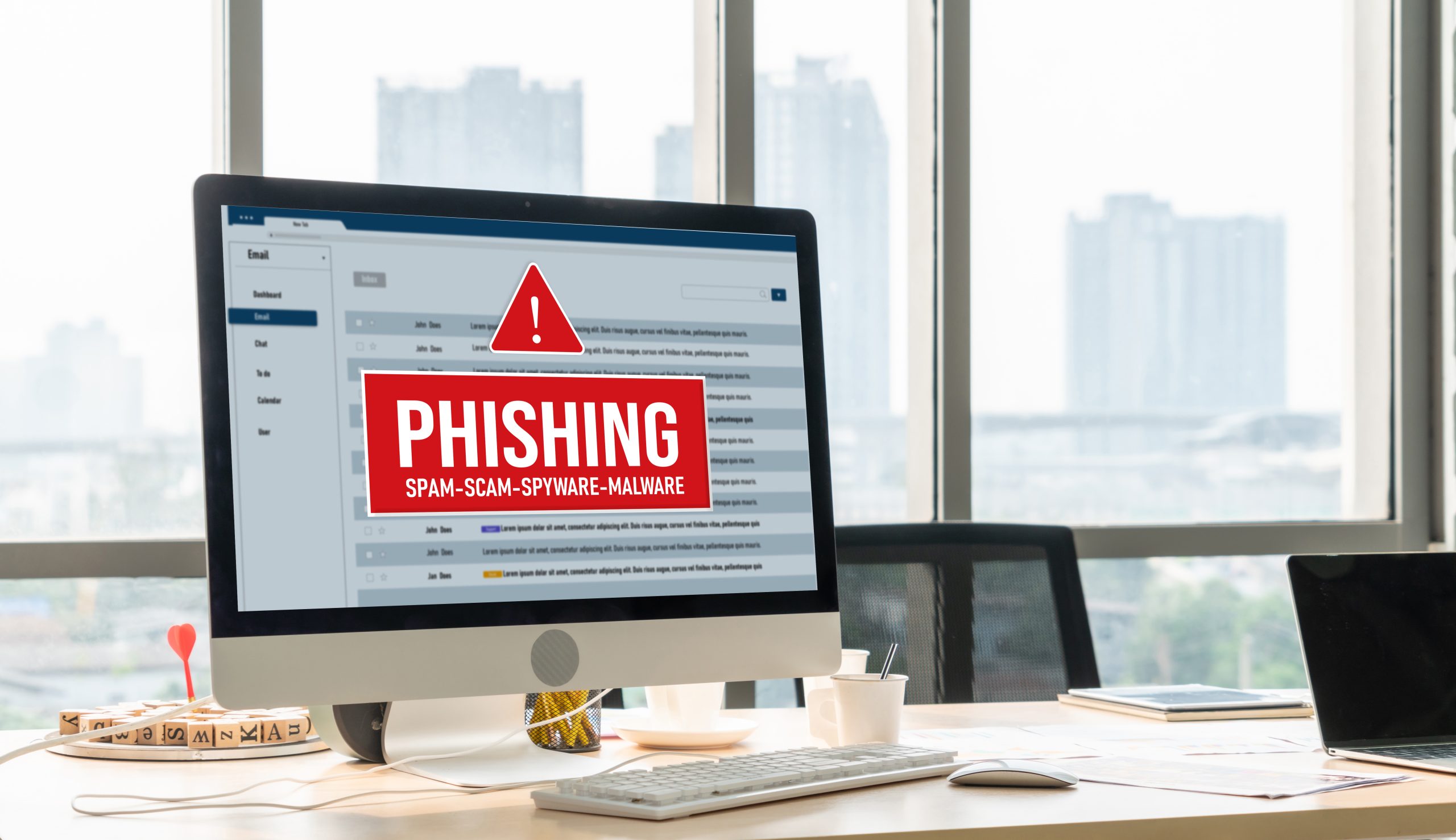
A few years ago, most phishing emails were easy to spot. They usually came from strange email addresses, contained spelling...